You can find all our articles for Free Members
Emerging Trends for PMO in 2026
Where Attention Really Needs to Go Next
Let’s be honest. Not every PMO is operating as a strategic partner yet. Some absolutely are. But plenty are still stuck being seen as administrative, compliance-heavy, or just “the reporting function”. And in more organisations than we’d like, PMOs are still having to justify their existence far more than they should.
At the House of PMO, we spend a lot of time listening. Through member conversations, training, roundtables, conferences, and the everyday challenges PMO professionals bring to us. And what we hear isn’t a neat maturity curve or a clean transformation story.
It’s progress mixed with frustration. Ambition mixed with constraint. And a very real desire to do better, within limits that aren’t always negotiable.
This trends report reflects that reality.
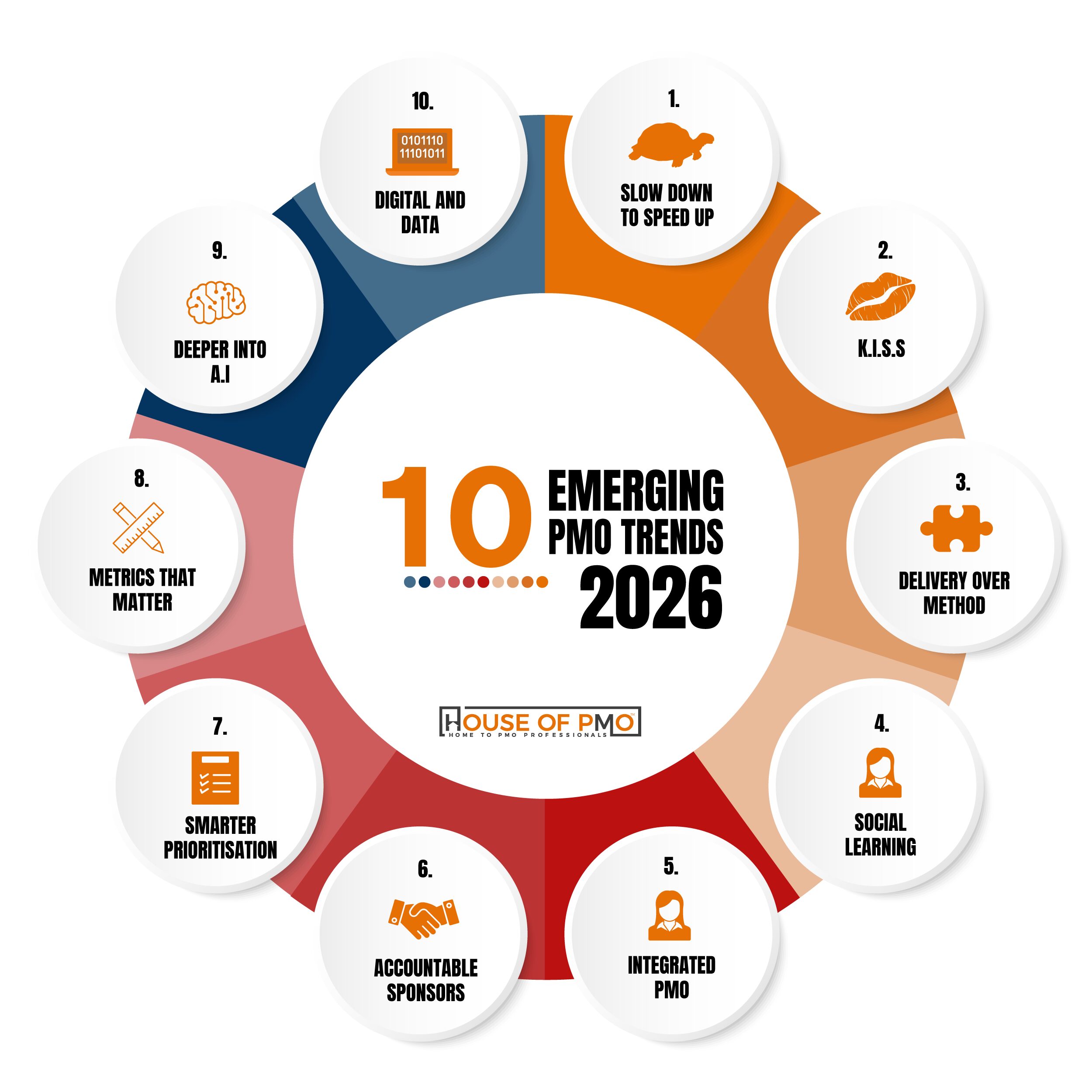
- Slow Down to Speed Up (The Power of Stage 0)
- Keep It Simple, Seriously (KISS)
- “Over Methods” – Delivery Above Methodology Labels
- Social Learning on the Rise
- Continued Integration of PMOs as Strategic Partners
- Engaging Sponsors as Accountable Leaders
- Smarter Prioritisation
- Metrics That Matter (Proving PMO Value)
- Deeper into AI and Automation
- Digital and Data-Driven PMO
Recorded Session
Presentation Deck
Download the DeckThe Big Picture – What These Trends Are Really Saying
Across the PMO community, there’s no single “right” model. But there are some very clear patterns emerging. PMOs are under pressure to:
- Prove their value (in ways leaders actually care about)
- Simplify what they do
- Stop mistaking activity for impact
These ten trends reflect that shift. They’re practical. Sometimes uncomfortable. And very grounded in reality.
 Slow Down to Speed Up – The Power of Stage 0
 Slow Down to Speed Up – The Power of Stage 0
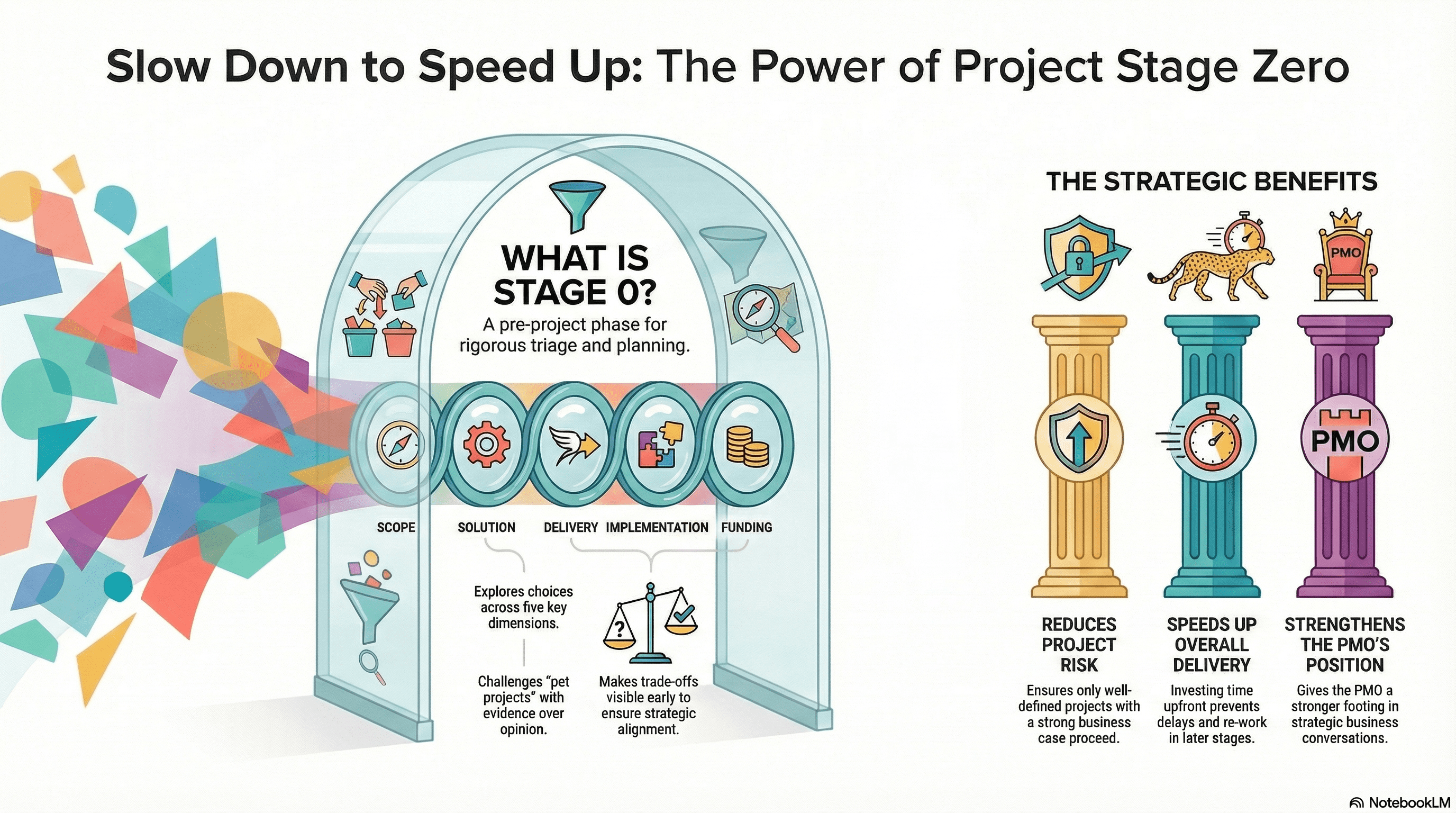
One of the strongest trends we’re seeing is PMOs deliberately slowing things down at the very start of the lifecycle. Stage 0. Strategic front-loading. Call it what you like.
The point is simple: spending time before a project formally starts is often the fastest way to improve delivery overall.
This isn’t bureaucracy for the sake of it. It’s about ensuring only the right initiatives, with the right foundations, ever make it to the starting line.
At the PMO Conference in Edinburgh, Carol Hindley-Baxter’s PMOLearn! session on optioneering and Better Business Cases made this really tangible. Stage 0 is where the proposition gets tested – across scope, solution, delivery, funding, and implementation – before people and money are committed.
We also saw a very practical example earlier in the year when Louise Barker from Pennine Care NHS Foundation Trust shared her “Stage Zero Triage Process”. Same principle. Clearer thinking upfront. Better outcomes downstream.
When Stage 0 is done well:
- Risk reduces
- Delivery speeds up overall
- The PMO earns a seat in more strategic conversations
But even the best early thinking falls over without the right leadership behind it.
Keep It Simple. Seriously.
 Keep It Simple. Seriously.
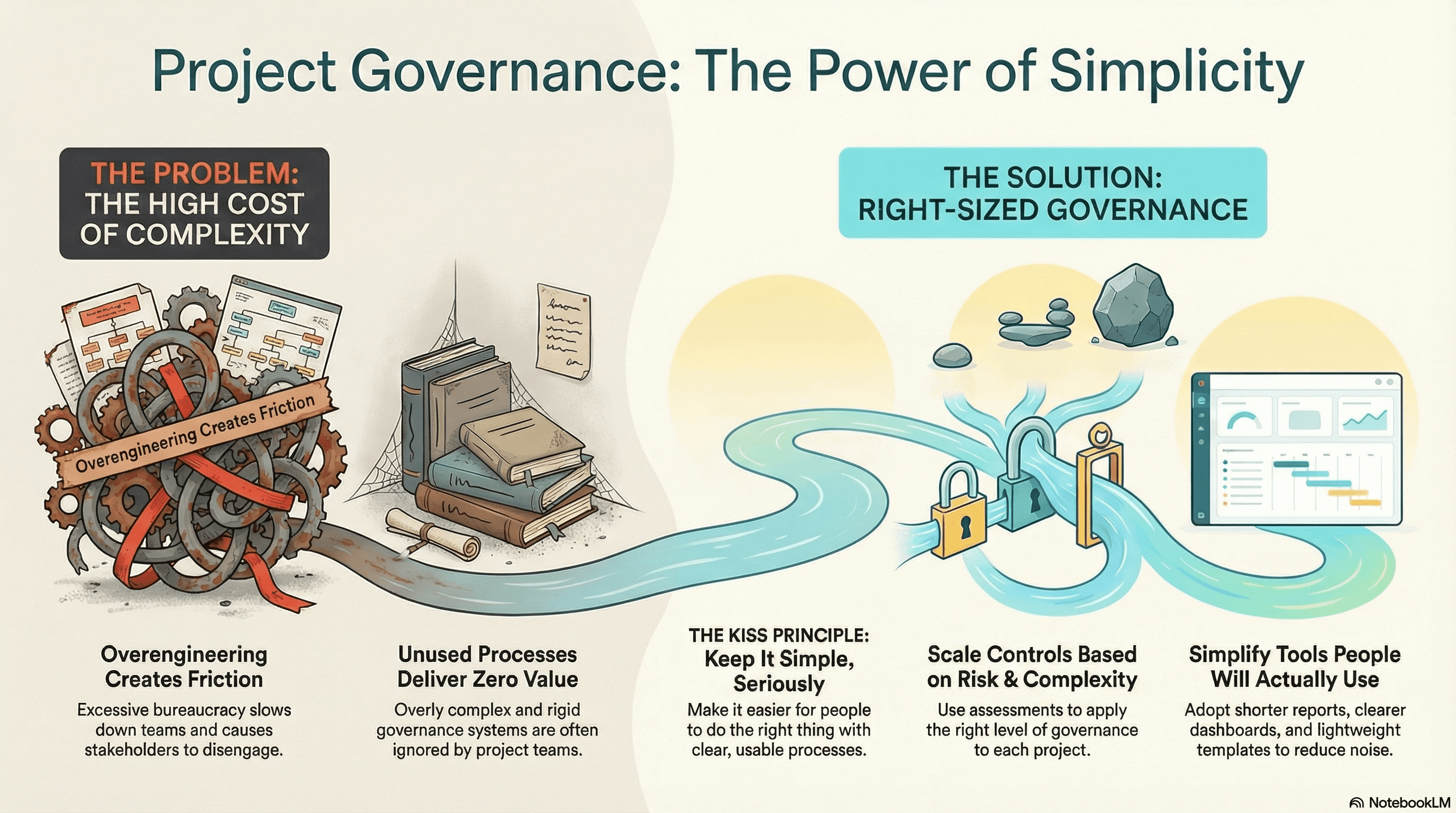
Simplicity has quietly become a competitive advantage. The most effective PMOs aren’t adding more process. They’re stripping things back. Shorter templates. Clearer governance. Proportionate controls.We heard this message repeatedly at in-person events this year: avoid overengineering.
PMOs are:
- Scaling governance based on risk and complexity
- Using complexity assessments to right-size control
- Auditing what’s actually used (and ditching the rest)
Simple doesn’t mean sloppy. It means usable. And usability drives engagement far better than enforcement ever did.
Delivery Over Methods
 Delivery Over Methods
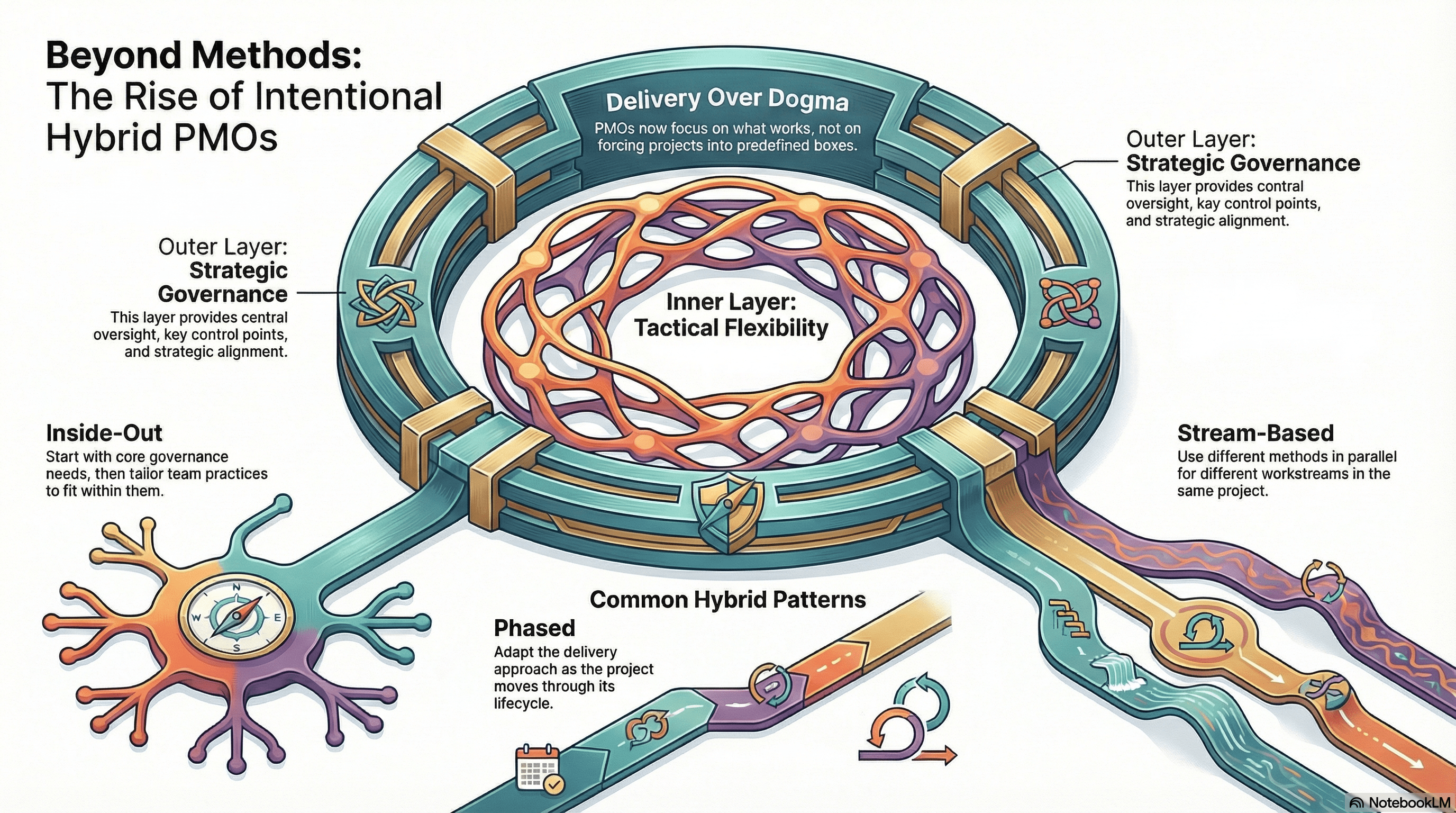
Methodology debates are losing relevance. And honestly, that’s a relief. Hybrid is now normal. The focus is on what works, not what label it carries.
We’re seeing PMOs deliberately design:
- Inside-out models (governance first, flexibility inside)
- Phased approaches as uncertainty reduces
- Different delivery styles running side by side
Structured, without being rigid. Flexible, without being chaotic.
Social Learning Is Growing Up
 Social Learning Is Growing Up
Courses still matter. They’re just not enough on their own.
PMOs are investing more in:
- Mentoring
- Peer reviews
- Communities of practice
- Learning through real work and reflection
That old 70/20/10 model is being quietly questioned. Something closer to 60/30/10 feels more honest now.
As one roundtable attendee put it, there’s huge value in “comparing scars”.

Integrated PMOs as Strategic Partners
 Integrated PMOs as Strategic Partners
This trend is one which we first saw a couple of years ago, and is still a trend today.
PMOs are embedding themselves closer to the business. Closer to decisions. Closer to strategy.
Accountability shifts from managing projects to improving how the organisation delivers change.
Not every PMO is there yet. But the direction is clear.
Make sure you check out the Inside PMO Report – The PMO as a Business Function for more insights on this.
Engaging Sponsors as Accountable Leaders
 Engaging Sponsors as Accountable Leaders
Poor sponsorship is still one of the biggest causes of project failure. And PMOs are finally stopping the polite fiction that this is “someone else’s problem”.
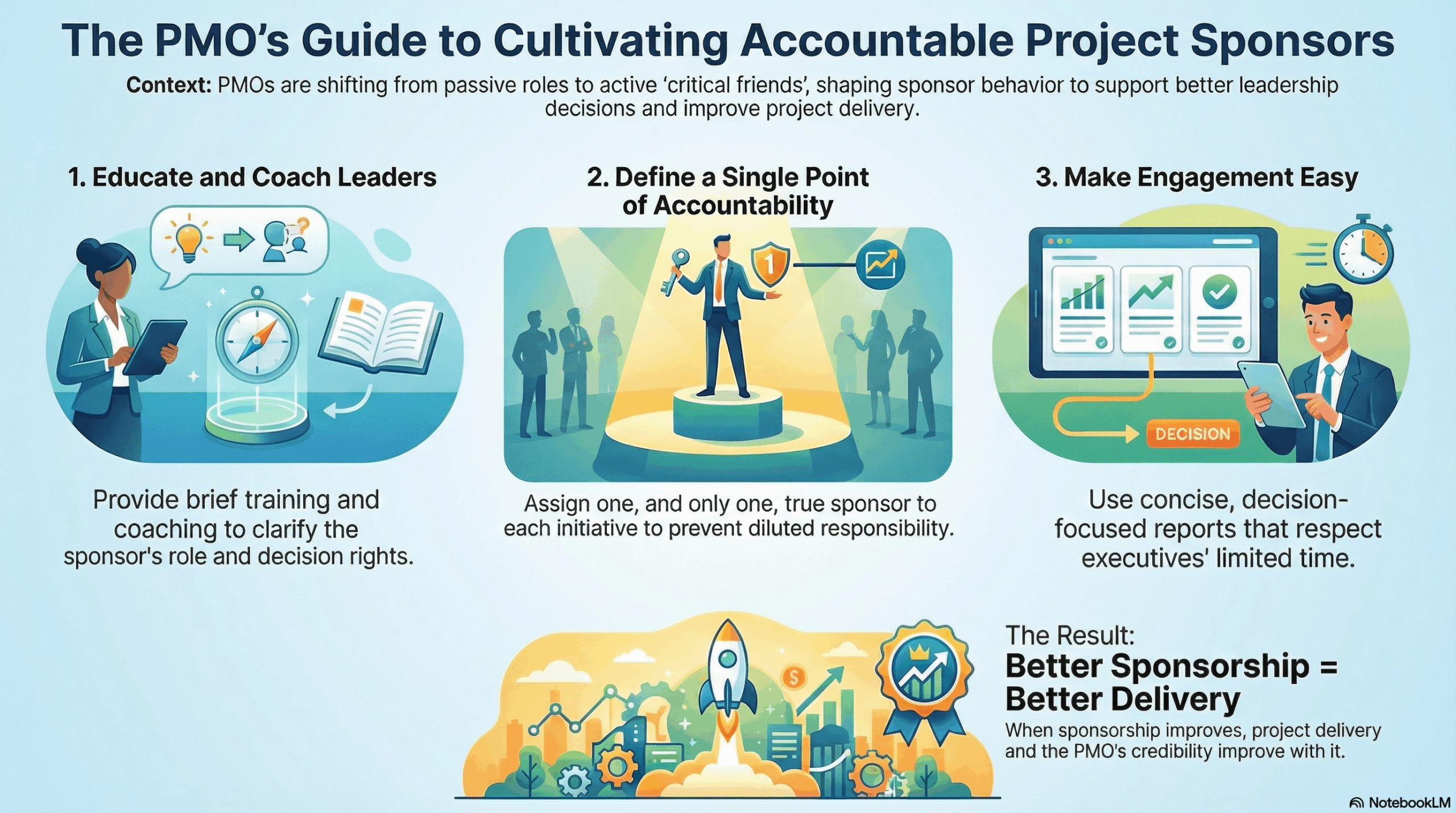
For 2026, we’re seeing PMOs take a much more active – and confident – role in shaping sponsor behaviour. Not by turning executives into project managers. But by making good sponsorship visible, practical, and easier to do.
From sessions like the Blue Light PMO Summit, a few approaches are really standing out:
- Short, focused sponsor briefings rather than big training programmes
- One-to-one coaching to clarify decision rights and expectations
- Pinning down a single, true sponsor instead of sponsorship by committee
- Decision-led reporting, so leaders know exactly what’s being asked of them, and when
The PMO’s role here is shifting into that “critical friend” space. Supportive, but firm. Evidence-led, not opinion-heavy. When sponsorship improves, delivery improves. And the PMO’s credibility improves with it.
Smarter Prioritisation (Finally)
 Smarter Prioritisation (Finally)
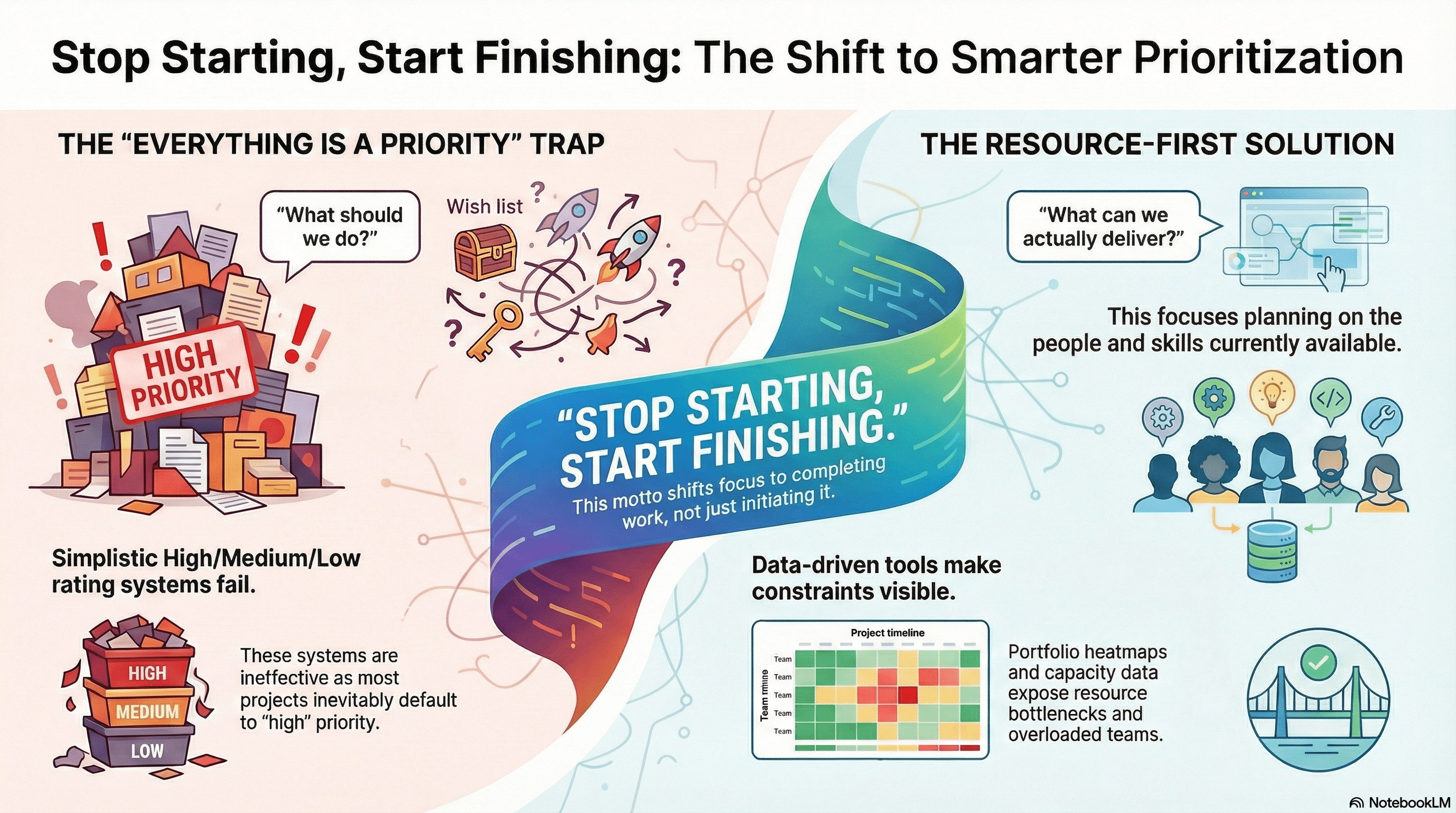
“Everything is a priority” is still the fastest way to deliver very little. PMOs are moving away from simplistic High/Medium/Low models and towards approaches that force real trade-offs:
- Multi-criteria scoring
- Benefits versus effort
- Capacity-led planning
- Visual portfolio heatmaps showing overload
Resource-first thinking is becoming more common. Not “what should we do?” but “what can we realistically deliver?” Seeing overload makes decisions unavoidable. And that’s a good thing.
Metrics That Matter – Proving PMO Value
 Metrics That Matter – Proving PMO Value
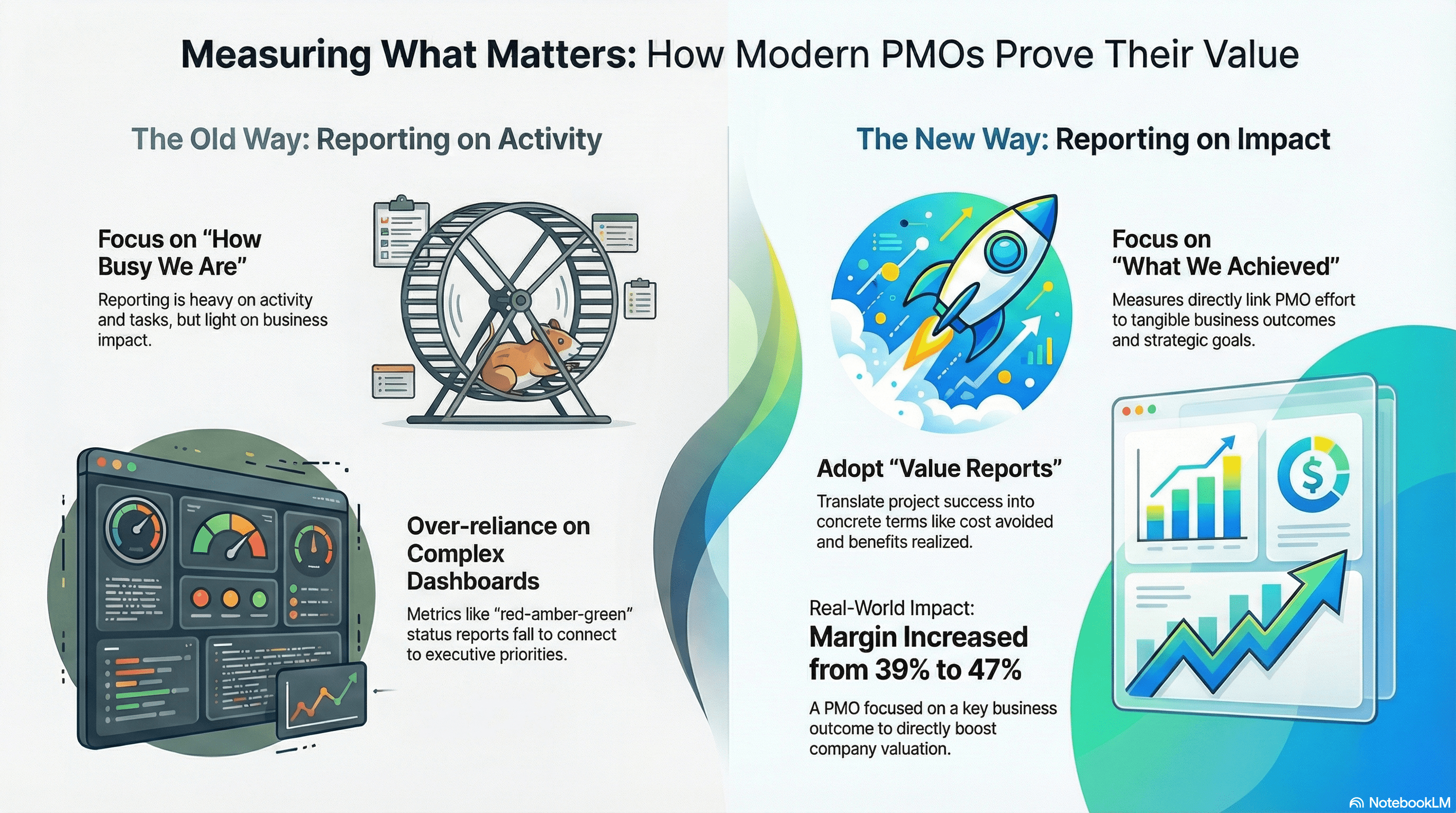
For many PMOs, reporting is still heavy on activity and light on impact. That’s no longer sustainable. In 2026, the shift is towards fewer measures, clearer narratives, and outcomes leaders genuinely care about.
We’re seeing:
- Fewer RAG-heavy dashboards
- More outcome-focused measures
- Annual value reports that translate delivery into business language
Michael Campbell’s example from Unifii at the PMO Conference landed hard for a reason:
“Margin from 39% to 47% six months prior to valuation.”
That’s not a PMO metric. That’s a business result.
The hardest part here isn’t finding better metrics. It’s having the confidence to stop reporting on things that don’t matter.
Deeper into AI and Automation
 Deeper into AI and Automation
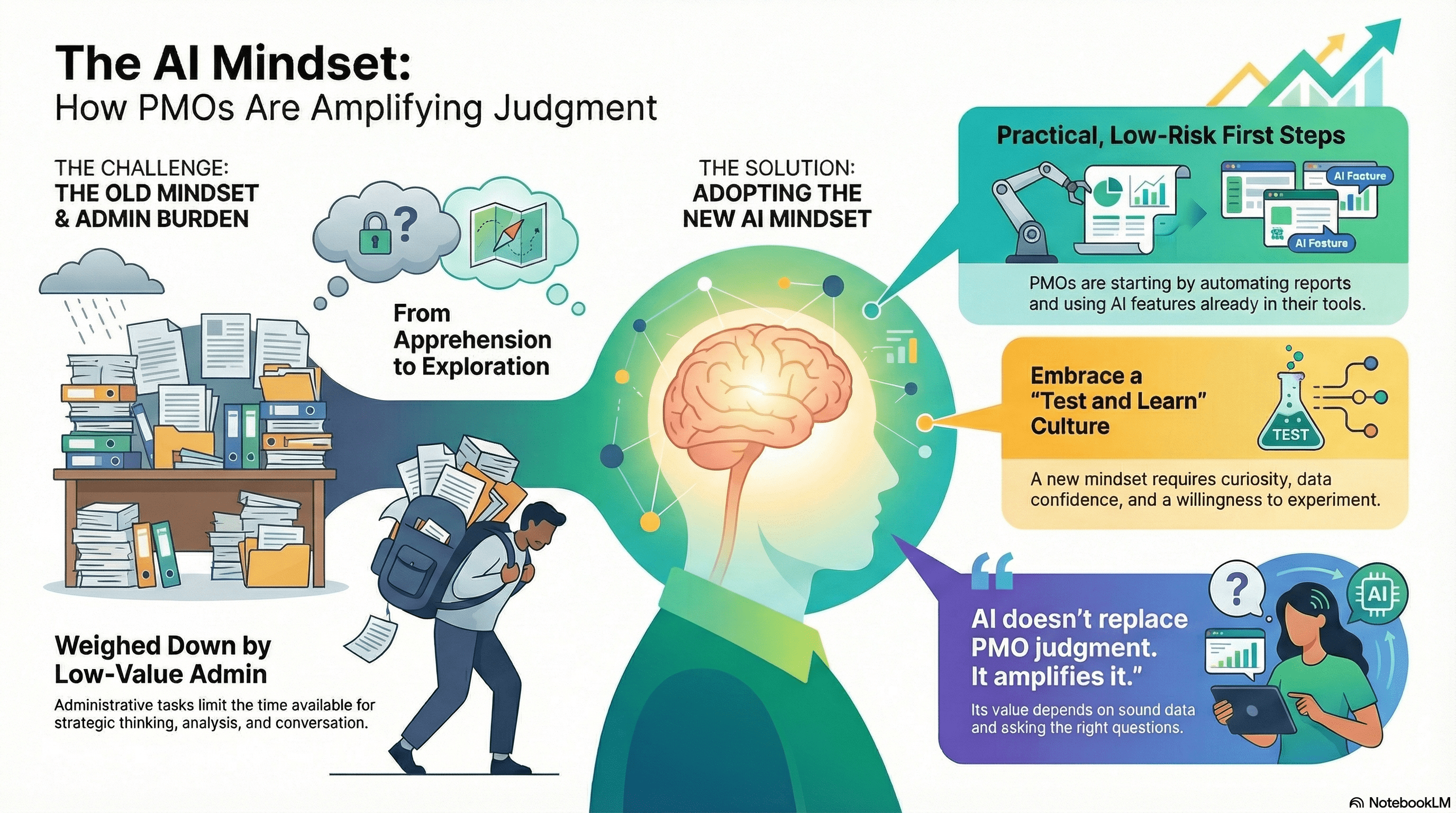
The tone of the AI conversation has changed. A lot. What started with anxiety has turned into cautious curiosity, and in some cases, genuine excitement. PMOs aren’t rushing headlong into complex solutions. They’re experimenting sensibly. Starting small. Learning as they go.
From Michael Campbell’s session at the PMO Conference and the Blue Light Summit, we’re seeing early use cases such as:
- Automating reporting and summaries
- Using AI for analysis and decision prep
- Exploring AI features already built into existing tools
What’s interesting is that this isn’t really about technology. It’s about mindset. PMOs are starting to see AI as a way to reduce low-value admin and free up time for thinking, analysis, and conversation. But only if the data underneath is sound, and the questions being asked actually matter.
AI doesn’t replace PMO judgement. It amplifies it. Or exposes its weaknesses.
Digital and Data-Driven – Discipline Before Dashboards
 Digital and Data-Driven – Discipline Before Dashboards
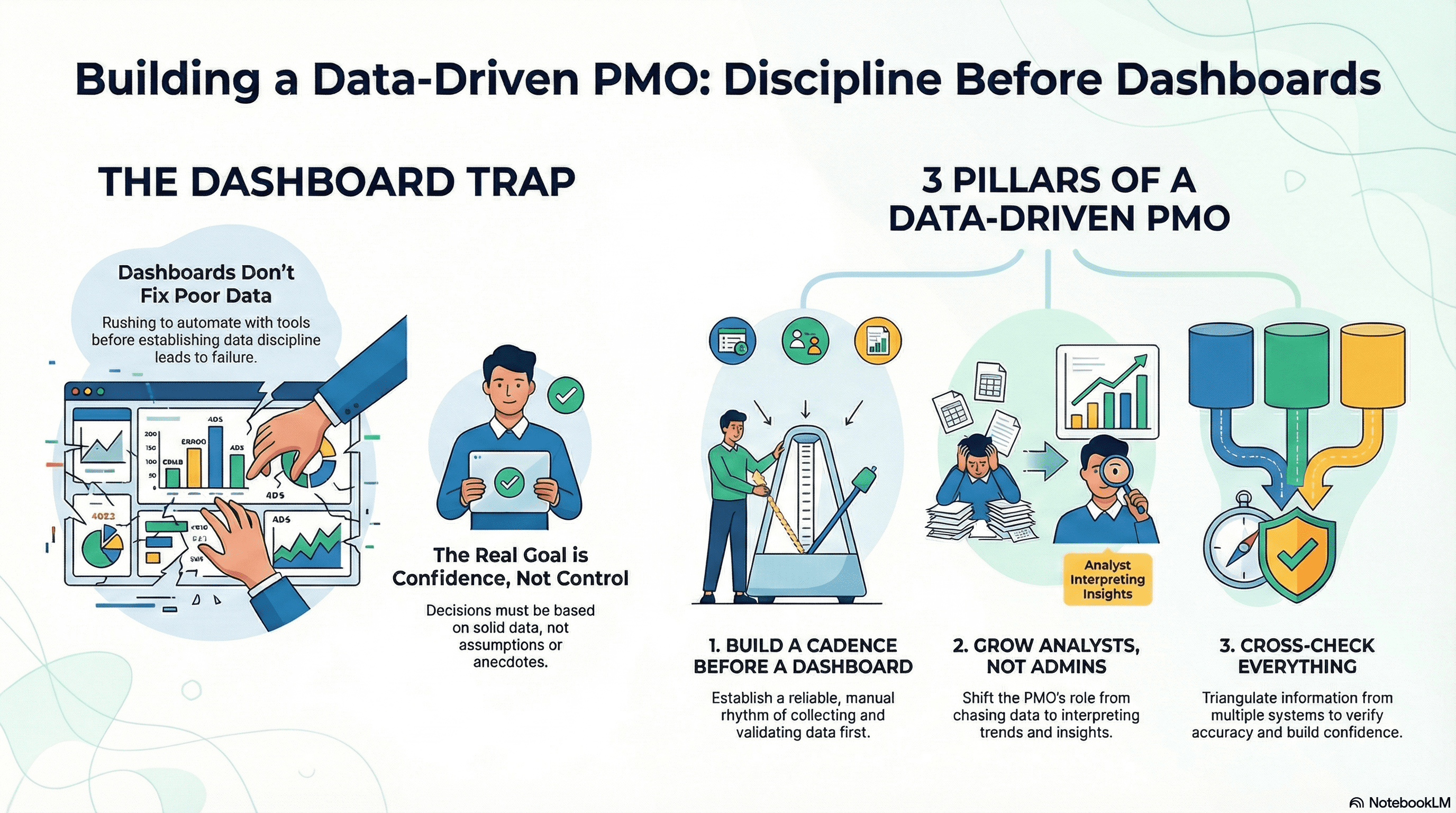
Everyone wants to be data-driven. Fewer are ready for what that actually takes. Dashboards don’t fix poor data. Automation doesn’t create insight on its own.
The more realistic PMOs are focusing on:
- Agreeing what data actually matters
- Building a reliable cadence before automating
- Shifting roles from chasing updates to analysing patterns
- Cross-checking data across finance, delivery, and operations
The goal isn’t control. It’s confidence. Confidence that decisions are based on something solid.