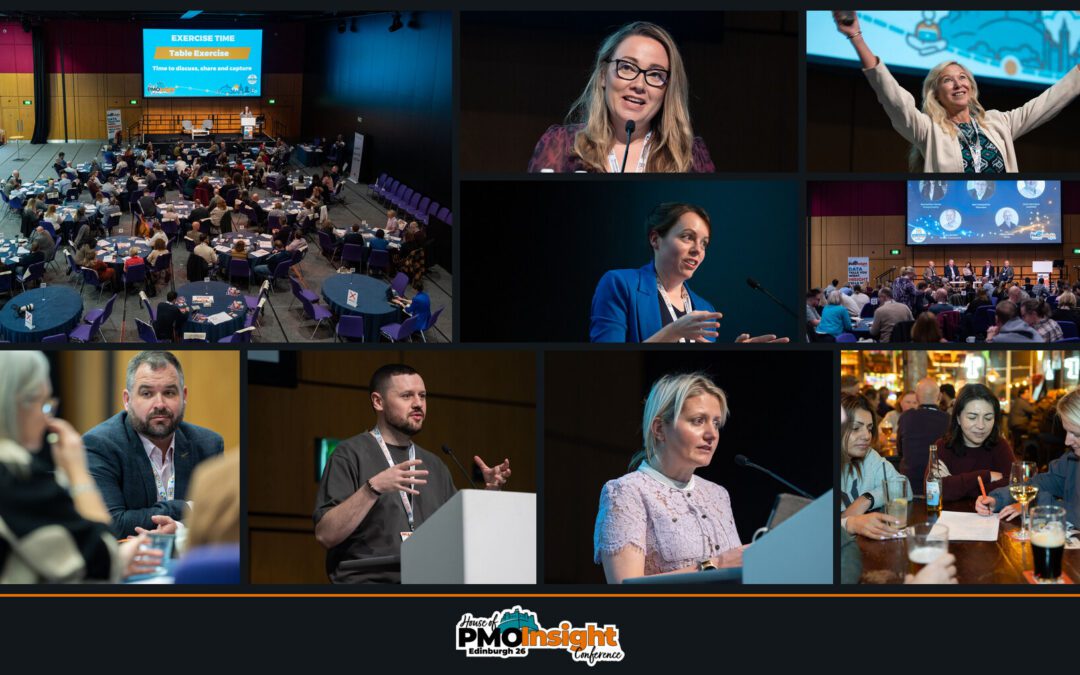
On 16th and 17th November, we brought PMO practitioners together at the Edinburgh International Conference Centre for our first PMO Insight Conference. We started with a question many teams will recognise: once the report has gone out, what happens next? If the people reading it still don’t know what they need to decide, there’s more work for the PMO to do.
Here are some highlights from the two days, and what we’ll do next with what we learnt together.
Day One: From reporting to decision-ready insight
Welcome, and why reporting has to change. Lindsay Scott and Eileen J Roden opened the conference by setting out the route from raw data to action. Eileen then asked us to look at where reporting loses its usefulness. The first table exercise made that personal: pick a decision your current reporting doesn’t support and work out where the disconnect starts.
Three PMO practitioner stories
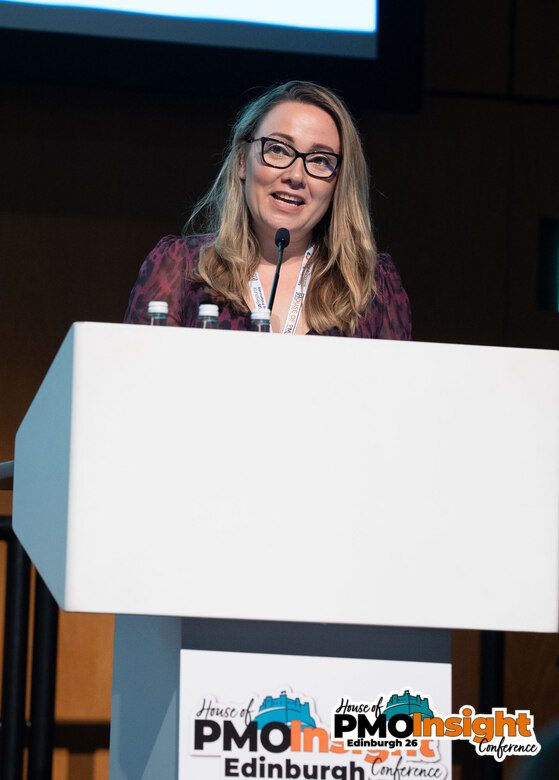
- Lucy Allen talked about building the foundations as a PMO of one. Her example showed where AI can do some of the heavy lifting, while leaving the judgement and decisions with people.
- Pedro Duerholt used an example from NatWest to show how AI could help compare delivery data with risks, assumptions, issues and dependencies. The useful bit was seeing what the datasets revealed together that neither showed on its own.
- Tanja Mayer described how the University of Glasgow tackled inconsistent reporting with a common monthly pack and clearer guidance. Before debating the ‘single source of truth’, ask what questions those reports are supposed to answer.
Lunch, demos and the Partner Studio. The conversations moved from the tables to the stands, with on-stage demos alongside the chance to talk through live challenges with our Insight Partners. The afternoon clinics gave delegates another opportunity to bring a question about their own reporting, data or tools.
A real PMO journey: Bristol Airport
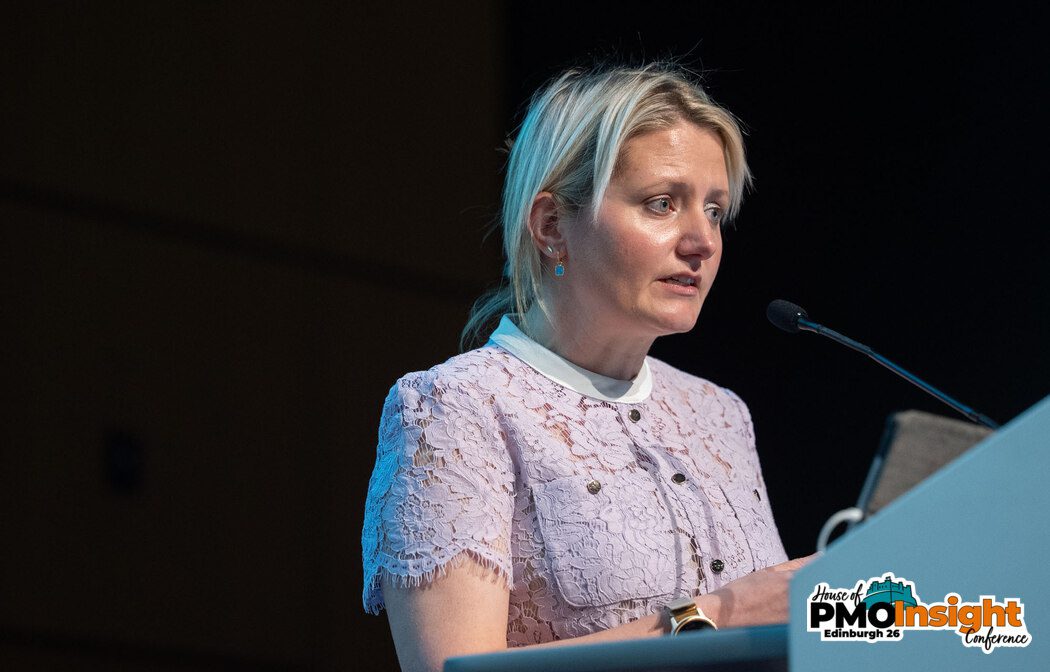
Sarah Landen stepped in to share how Bristol Airport’s PMO changed the way it supports investment decisions. Individual projects can all look healthy while the portfolio still has a problem with shared capacity, dependencies or benefits. That changes the question leadership needs to ask: are we backing the right portfolio?
The Decision Canvas. Eileen then put that decision-first approach to work. Each table took a real decision and worked backwards through the evidence, gaps, options and uncertainty before deciding what to put in front of a leader.
Insight Partner Provocations. In the lightning talks, the partners challenged us to ask whether a reporting problem was really a data problem, whether expectations of PMO teams were rising faster than we were developing their people, and which parts of the operating model need to be ready before introducing AI.
Building the decision story
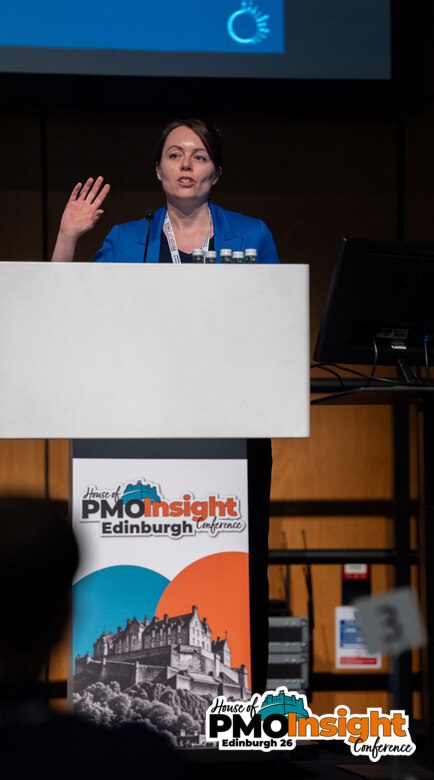
Cara Thompson got the tables to turn information into a story a decision-maker could follow. With Aaron West helping bring the scenario to life, it was a chance to practise explaining what we know, what’s uncertain and why it matters. The test was simple: would this help a leader act?
Closing day one. Eileen asked delegates to capture what had changed in their thinking and leave a question for the next day’s tools panel.

PMO Flashmob and the Great PMO Quiz
We carried on at Malones with the PMO Flashmob and the Great PMO Quiz, hosted by Aaron and Lindsay. A good excuse to keep talking to the people we’d been working with all day, and to see how much PMO knowledge we could muster in a pub.
Day two: From insight to action
What did day one tell us? Eileen opened with a look back at the table work, bringing the reporting problems, evidence gaps and unsupported decisions into the second day.
From reporting office to decision-enabling PMO. David Rolo distinguished three stages: reporting what happened, making sense of it, and helping someone decide what to do about it. The challenge is to be clear about what the PMO contributes at each stage.
What makes data decision-ready?
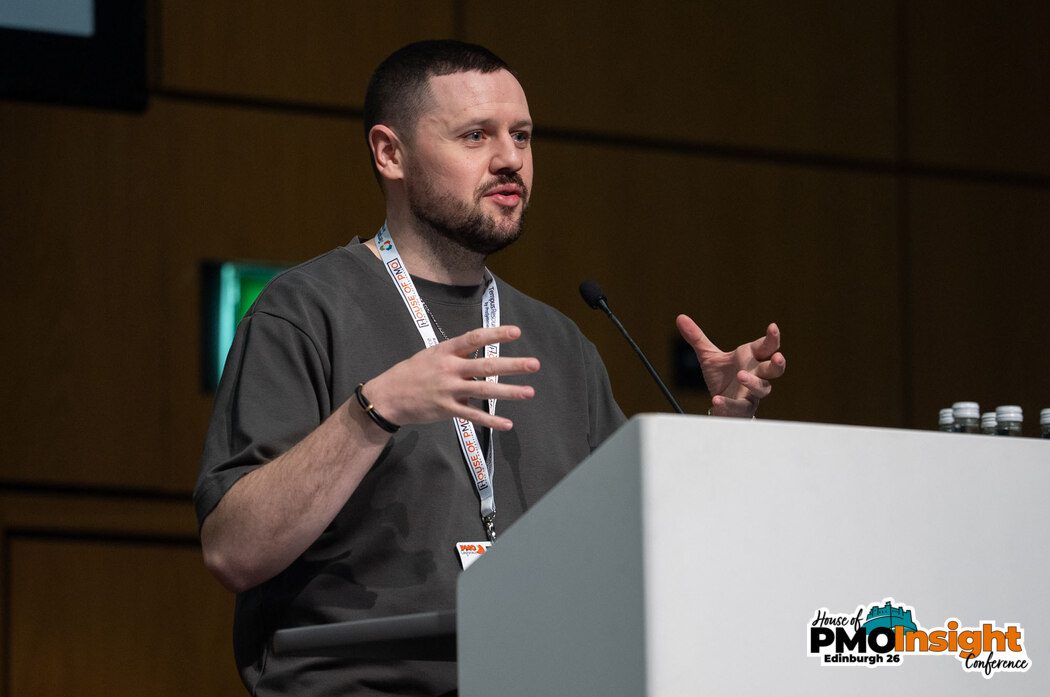
Eileen J Roden set up the morning’s exercise by asking teams what was missing, stale or difficult to trust in the packs they use. Michael Campbell then took us into the Data Confidence Lab, where the tables had to pick out the data points that mattered, test what they really supported and decide what they’d be comfortable putting in front of a leader.
Making PPM tools work for your PMO
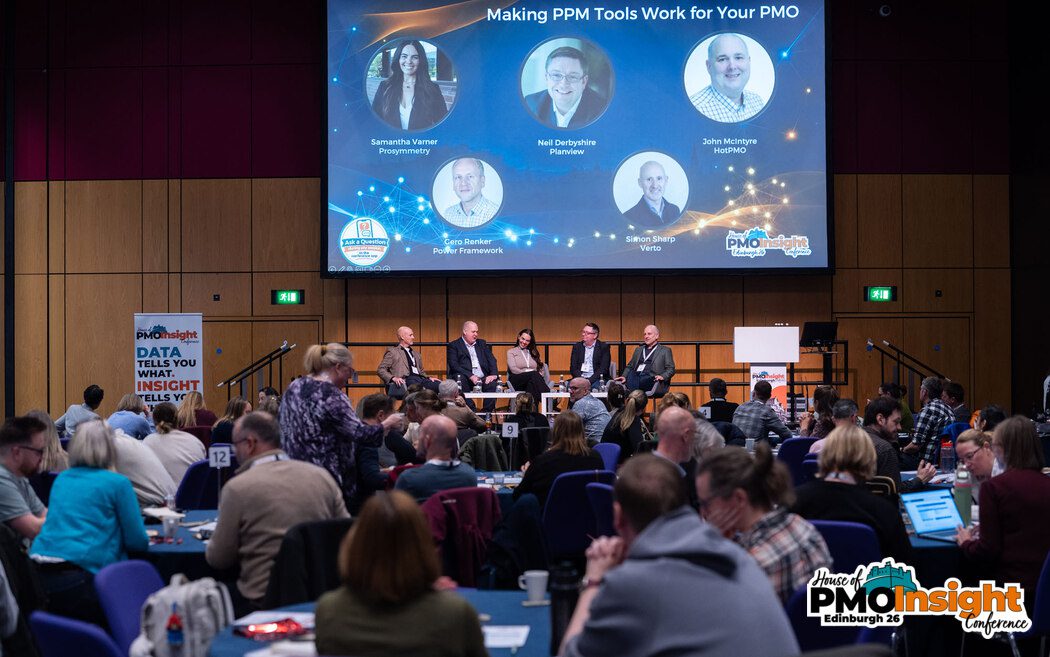
Eileen chaired Samantha Varner (ProSymmetry), Neil Derbyshire (Planview), John McIntyre (HotPMO), Gero Renker (Power Framework) and Simon Sharp (Verto). They discussed where project and portfolio management platforms make a difference, and what they can realistically do to help a PMO get from reporting to insight.
Choosing the roundtable questions. Before lunch, tables picked the questions they most wanted to discuss. That gave the afternoon its agenda, alongside more time for partner demos and conversations.
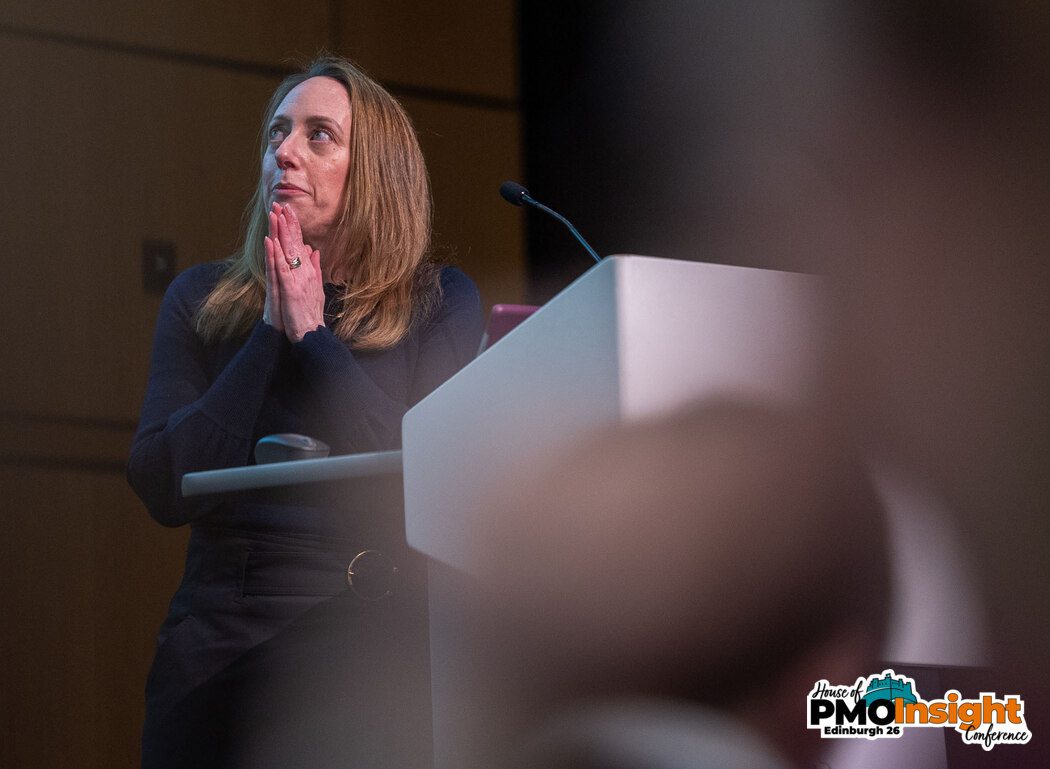
The AI-enabled PMO: Practical use cases
Sara Ellington of Tenable looked at where AI can make PMO work easier, including making portfolio information easier to see and use. She also addressed the accuracy and data quality checks that still need to happen, and where human review matters.
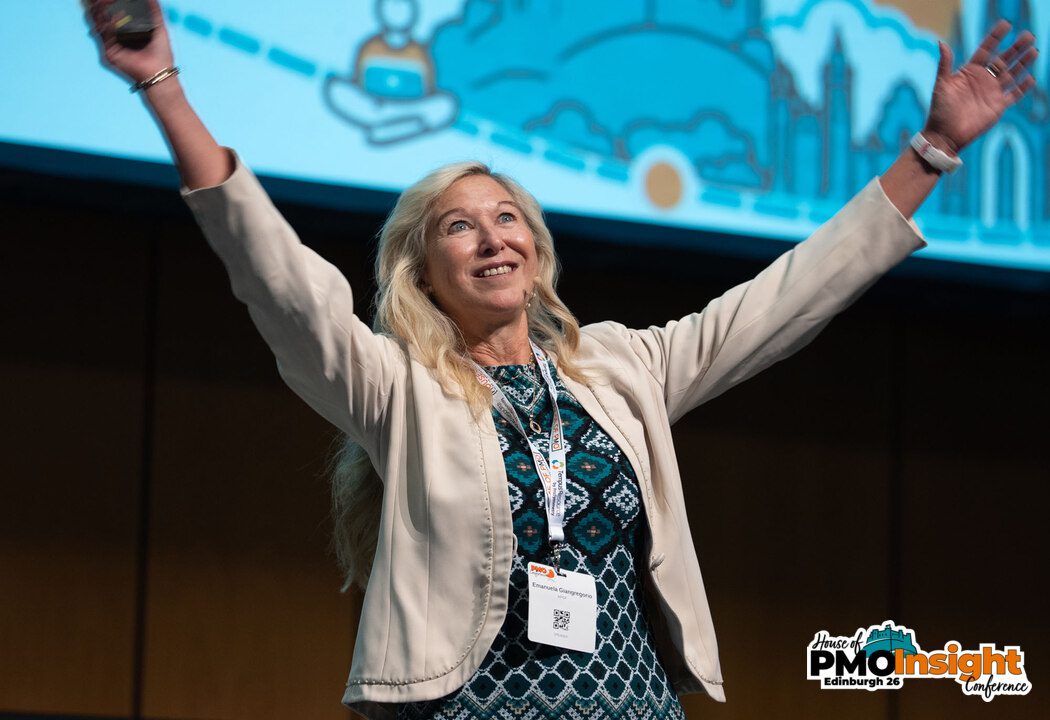
AI governance and the steering pack exercise
Emanuela Giangregorio explored two sides of AI governance for PMOs: building governance into the way projects work, and assuring how teams use AI in those projects. Then the room tried it out. Faced with AI-supported information in a steering committee pack, the tables had to decide what could be trusted, what needed checking and whether the decision should go ahead.
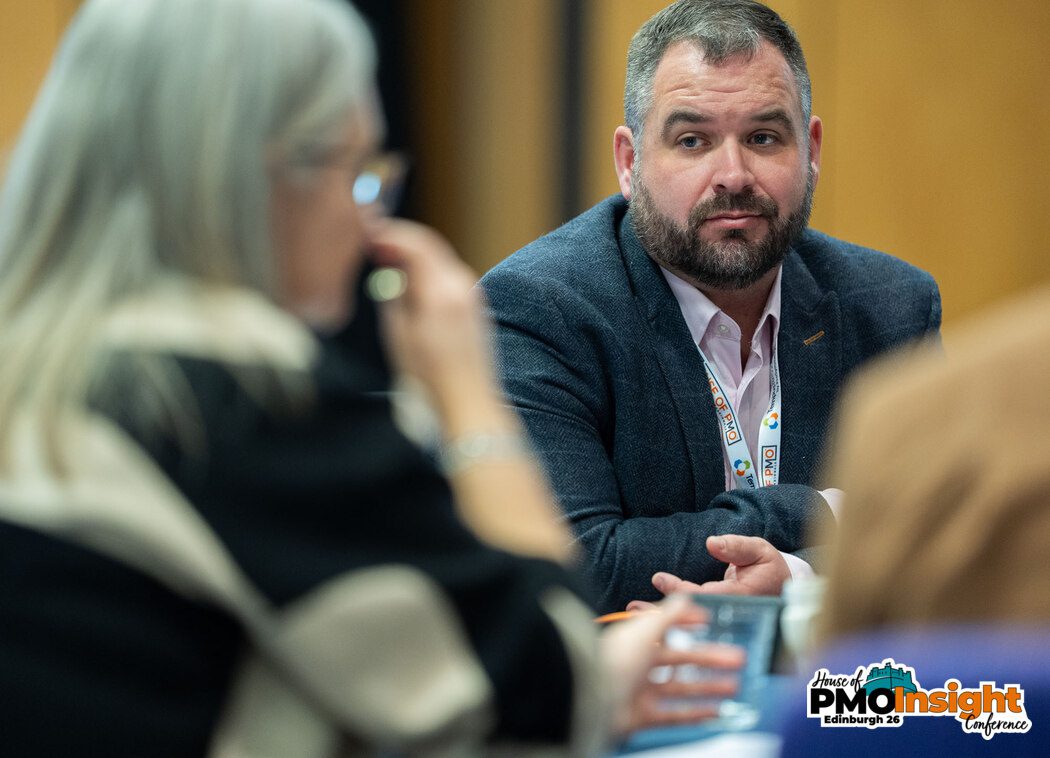
Roundtables, playback and the next 90 days
With help from our roundtable hosts, delegates worked through two of the questions the tables had chosen. Eileen and Aaron brought the room back together to hear what people would do differently and what they still wanted to know. Eileen closed by asking everyone to put a first step into their own 90-day action plan.
What happens next?
This is a highlights post. The work now is to bring together what we learnt across the two days: the examples from the stage, what delegates came up with around the tables, and the questions we didn’t get to the bottom of. We’ll pull that into a report and look at which of those questions need a closer look with the community.
We’ll also arrange a 30-day follow-up session for delegates to check in on the first steps in their plans. What have you tried? What’s getting in the way? What would be useful to work through together before the next 60 days?
Edinburgh was the start of an ongoing conversation. We’ll be back next year, and what you try between now and then will help shape what we cover.
Thank you to everyone who made it happen
Thank you to our delegates, speakers, panellists and facilitators, the House of PMO team and the Edinburgh International Conference Centre. Thanks also to our Insight Partners: ProSymmetry, Verto, Power Framework, Planisware, Planview, Fluid and HotPMO.
You can revisit the two-day Edinburgh programme. If you were there, what’s one thing you’ve already taken back to your PMO?